
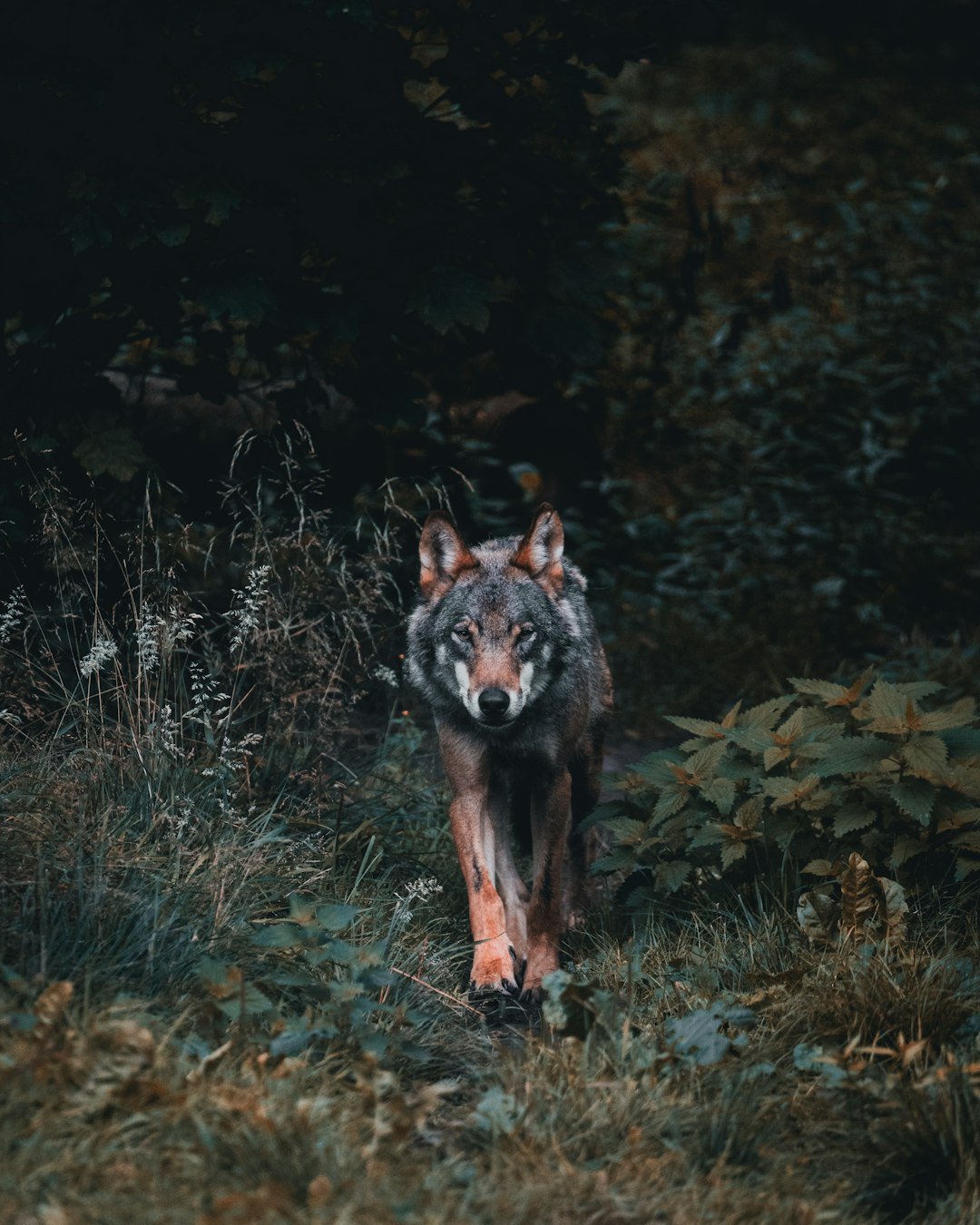
Editorial disclosure: Fiction Found Here publishes What Fate Can’t Choose by Talia Lorne. It is included because the pack functions as a community with responsibilities, secrecy, territory, and regional consequences rather than as decorative paranormal scenery.
Wolf-shifter romance works best when the pack feels like more than a collection of attractive supernatural men. Hierarchy should create obligations. Territory should matter. Shifting should affect how characters move through the world. Pack rules should create both safety and conflict.
The books below use werewolf or wolf-shifter worldbuilding in materially different ways, but each gives the supernatural community a role in the plot rather than treating the wolf side as a cosmetic label.
Quick picks
| If you want… | Start with… |
|---|---|
| Modern pack responsibility + adult emergency stakes | What Fate Can’t Choose |
| Pack hierarchy + mate bond + external hunt | Cry Wolf by Patricia Briggs |
| Wild pack culture with its own laws | The Last Wolf by Maria Vale |
| Rejected-mate politics inside a restrictive pack | The Tyrant Alpha’s Rejected Mate by Cate C. Wells |
| Dark pack politics + true-mate conflict | Rejected by Jaymin Eve |
1. What Fate Can’t Choose by Talia Lorne
Pack-world appeal: hidden-community responsibility, regional emergency management, territory, secrecy, and an Alpha whose role has practical obligations.
Assistant Emergency Manager Mira Danner meets Grant Morlan during a prolonged Oregon rain emergency and landslide evacuation. Grant is not simply “the Alpha” as a romantic title. His pack has land, people, secrecy, and regional responsibilities that continue regardless of what happens between him and Mira.
The fated-mate bond creates pressure, but the relationship still has to survive ordinary adult questions: trust, consent, compatibility, work, and whether Mira wants a place in this hidden world at all.
Explore What Fate Can’t Choose · View it on Amazon
2. Cry Wolf by Patricia Briggs
Pack-world appeal: werewolf hierarchy, the Marrok’s authority, internal pack damage, mate recognition, and a supernatural threat outside the relationship.
Anna has spent years at the bottom of an abusive pack before Charles Cornick arrives and recognizes that she is an Omega. The first novel then moves into the Montana wilderness, where the pair must deal with a rogue-wolf threat and forces that put the wider pack at risk.
Learn more from Penguin Random House.
3. The Last Wolf by Maria Vale
Pack-world appeal: a wolf society built around survival, hierarchy, land, ritual, and a worldview that does not simply map human assumptions onto supernatural characters.
Silver is at the bottom of the Great North Pack’s social order when a wounded stranger arrives in pack territory. The external danger threatens not just the couple but the pack’s land and survival, making community structure central to the romance.
4. The Tyrant Alpha’s Rejected Mate by Cate C. Wells
Pack-world appeal: restrictive hierarchy, rejected-mate consequences, pack status, and a heroine building independence inside a system that undervalues her.
Una has learned to survive near the bottom of a pack where female wolves rank low and her physical differences make her easy to dismiss. When she recognizes Alpha Killian as her mate and he rejects her publicly, the bond becomes a political and social problem as much as a romantic one.
Una’s hidden farmer’s-market business is also important: it gives her a sphere of competence and community that does not depend on the Alpha.
See the current book description.
5. Rejected by Jaymin Eve
Pack-world appeal: outcast status, true-mate expectations, punishment by the pack, and a supernatural hierarchy that expands beyond ordinary wolf politics.
Mera grows up inside a powerful shifter pack after her father’s betrayal turns her into a target. Her first shift is expected to reveal her true mate, but the result does not deliver the safe future she imagined.
The Shadow Beast Shifters trilogy has renewed visibility through Harlequin’s current deluxe paperback editions, with Reclaimed and Reborn reissued in 2026.
See the current Harlequin editions.
6. Kiss of Snow by Nalini Singh
Pack-world appeal: the SnowDancer wolf pack functions as a political, military, and emotional community rather than mere romantic scenery.
Sienna Lauren has defected from the PsyNet and lives among the SnowDancers, while Hawke carries the responsibilities of an Alpha during escalating conflict. The external threat to the pack makes the romance inseparable from larger questions of loyalty and survival.
Learn more from Penguin Random House.
7. A Hunger Like No Other by Kresley Cole
Pack-world appeal: Lykae clan identity, predestined mates, longstanding supernatural conflict, and a much larger paranormal society.
Lachlain MacRieve is leader of the Lykae Clan and recognizes Emmaline as his predestined mate after centuries of captivity. The book is a foundational fated-mates paranormal romance, but readers should expect a more coercive early dynamic than many newer mate-bond romances use.
Learn more from Simon & Schuster.
8. Wolf Gone Wild by Juliette Cross
Pack-world appeal: wolf instinct and supernatural identity matter directly to the romantic problem even though the book is more couple-focused than pack-political.
Mateo Cruz has been unable to shift for months, leaving his wolf trapped in his head and increasingly difficult to control. He turns to witch Evie Savoie for help, crossing supernatural-community boundaries in the process.
9. Alpha and Omega by Patricia Briggs
Pack-world appeal: the novella that establishes Anna, Charles, the Chicago pack conflict, and Anna’s rare Omega role before Cry Wolf.
If you care most about how hierarchy works, begin here before the first full novel. Anna’s position inside an abusive pack and Charles’s arrival change the power structure before the larger Alpha and Omega series begins.
Learn more from Penguin Random House.
What makes wolf-shifter worldbuilding feel real?
- The pack has functions. Leadership should involve work, not merely dominance.
- Territory creates consequences. Land, secrecy, neighbors, enemies, and resources should matter.
- Hierarchy should affect ordinary life. Rank is more convincing when it changes obligations, protection, access, and conflict.
- Shifting should alter the plot. Senses, mobility, healing, instinct, or physical limits should create options and problems.
- The heroine needs a relationship to the pack. Joining, rejecting, reforming, surviving, or negotiating with the community should be a meaningful choice.
For more, visit the Paranormal Romance hub, explore Rainmark Wolves, or continue to fated-mates romances where choice still matters.